Across
State Lines
One License. Many States. A Shared Standard.
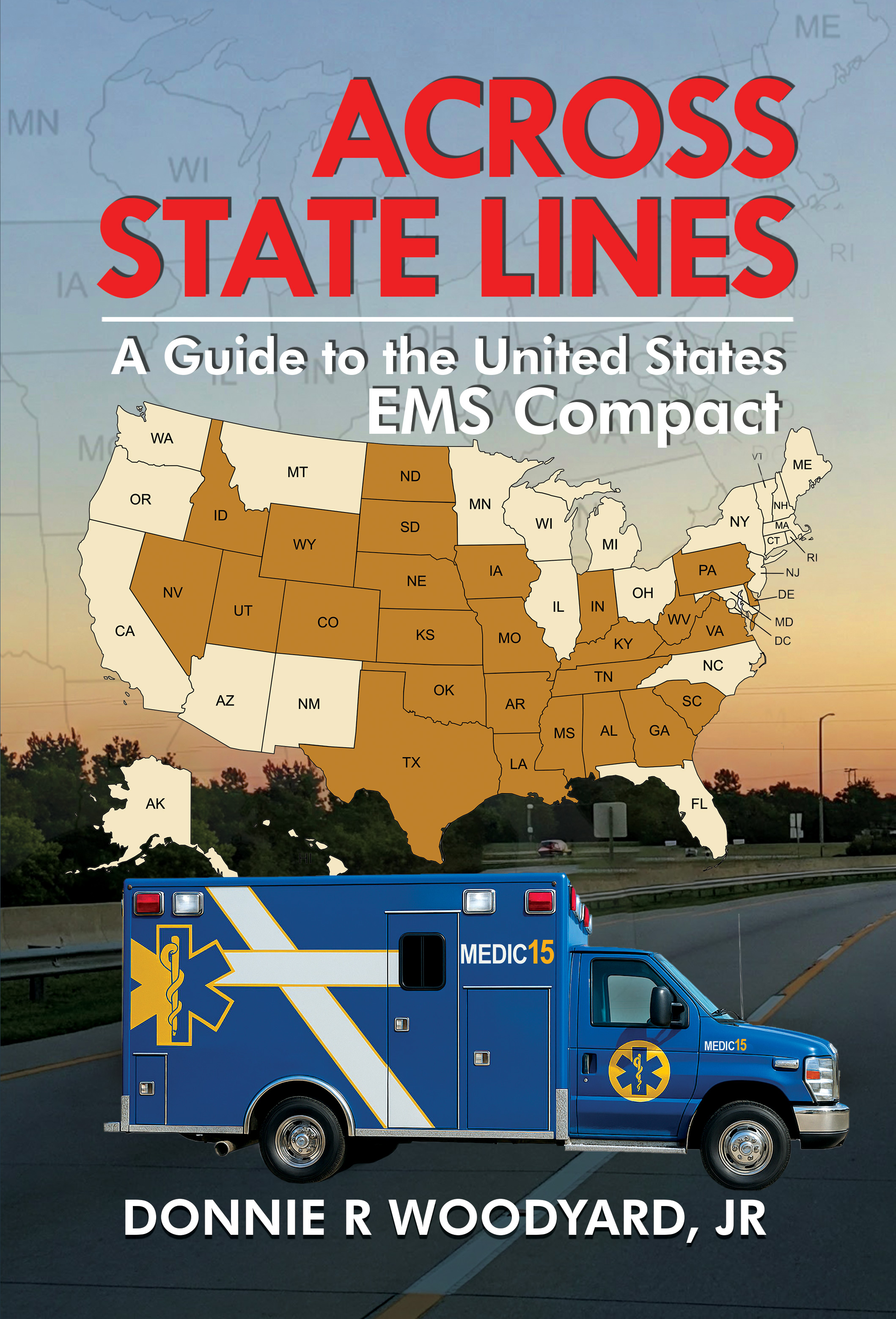
A Guide to the United States EMS Compact
This textbook-style book is the definitive resource on the EMS Compact — designed for EMS educators, agency leaders, students, and policy professionals. Whether you're teaching the next generation of clinicians, navigating EMS personnel licensure, or shaping state legislation, this book delivers practical insights, legal clarity, and historical context.
Adopted by 25 states, the United States EMS Compact is the gold standard for licensure and represents the future of interstate EMS practice.
Designed For
The Foundational Textbook on Interstate Practice of EMS
Across State Lines delivers a structured, clear, and deeply researched overview of the United States EMS Compact. Written in textbook format, each chapter includes key themes, historical background, and real-world implications.
This resource equips readers to:
- Understand the Compact's legal foundation and operational structure
- Explore how interstate licensure improves workforce mobility
- Support military medics transitioning to civilian EMS roles
- Learn how public protection is maintained across state lines
- Implement the Compact within state systems or academic curricula
Whether in the classroom or a state agency office, this book is a critical reference for anyone shaping the future of EMS.
Foreword
As Special Legal Counsel for the National Center for Interstate Compacts it was both an honor and a privilege to serve as a principal compact drafter and member of the EMS National Advisory Panel to provide the legal framework, build consensus, and advance the national dialogue that made the United States EMS Compact a reality. It was also a privilege to assist in convening the inaugural meeting of the Interstate Commission for EMS Personnel Practice on October 10, 2017 in Oklahoma City.
Interstate compacts are not widely understood, although the EMS compact and other health occupational licensure compacts mentioned in this Guide have resulted in unprecedented use of compacts in a wide range of interstate regulatory purposes including licensure of EMS personnel. As science and technology have enabled people to travel the country virtually as well as literally, such mobility has also increased the need for accommodating health practitioners licensed across state lines to provide competent health care commensurate with the rapidly changing laws and regulations concerning the provision of telehealth to our highly mobile society.
As this Guide demonstrates, clinicians often cross state lines, not as an exception but as part of their day-to-day work, disaster response, or military service. The EMS Compact ensures clinicians can do so legally, safely, and efficiently without sacrificing public protection or clinical oversight. This Guide also illustrates that a national crisis such as the Covid-19 epidemic requires a licensure process in which compact member states could immediately recognize EMS licensees from other Compact states for the first time without requiring additional applications, processing delays, or redundant fees. A process which once took weeks was now needed to be instantaneous and as the result of the EMS compact, clinicians were quickly deployed across state lines with the legal authority to practice.
Donnie Woodyard has provided a comprehensive analysis of the EMS Compact, including chapters on How the EMS Compact Functions, Disaster Response and Mutual Aid, EMS Data Privacy and National Security, and Advancing the EMS Compact Together. His experience, knowledge, and insights give us an invaluable look from the inside and the impact of the EMS Compact on member states and the nation.
This Guide is an extraordinary resource for those involved in EMS work including clinicians and regulators, as well as legislative and executive branch officials and I am grateful that this definitive work has been made available.

Chapters
- From Colonies to Compact: The Legal Roots of EMS Mobility
- The Legal Framework
- From Vision to Reality
- Model Legislation and State Adoption
- The Compact Commission
- Privilege to Practice
- Home State and Remote State Defined
- Scope of Practice Across State Lines
- Professionalism & EMS Agencies
- Adverse Actions and Accountability
- The National EMS Coordinated Database
- Military Medics and EMS Licensure Mobility
- Disaster Response and Mutual Aid
- Recruitment, Retention, and Resilience
- Biometric Criminal History Checks
- Growing the Compact
- Technology, Interoperability, and Innovation
- EMS Data Privacy and National Security
- The Road Ahead: Advancing the EMS Compact Together
Disclaimer & Legal Notice
While every effort has been made to ensure the accuracy of the information presented in this publication, it is intended for educational and informational purposes only. It should not be interpreted as legal advice. Readers are strongly encouraged to consult with qualified legal counsel or their state EMS office regarding any legal, regulatory, or operational decisions related to the EMS Compact or interstate practice.
This publication is an independent work by Donnie Woodyard, Jr. It was not commissioned, endorsed, reviewed, or authorized by the Interstate Commission for EMS Personnel Practice. The Commission does not assume responsibility for this publication. The opinions expressed herein are solely those of the author. Any reference to Commission materials is based exclusively on publicly available information and sources in the public domain.