← All Eras
Era 2 of 6 · 1929–1965

Fragmentation and the Dark Age of EMS

A system without standards

Emergency medical care fractured across funeral homes, police departments, and volunteer squads with no unified training, oversight, or standards.

24 documented events
1929–1939 1 event
National Event

The Great Depression – Collapse and Rebuilding of Public Health Infrastructure

The Great Depression devastated municipal budgets, forcing many cities to eliminate or reduce ambulance services. In response, the federal government expanded public works programs like the Works Progress Administration (WPA), which helped fund hospitals, health departments, and basic emergency transport systems. This period exposed the fragility of local emergency care systems and spurred later efforts to formalize and standardize EMS infrastructure.
1937 1 event

First Air‑Conditioned Ambulance

In 1937, Hess and Eisenhardt of Cincinnati built the first U.S. ambulance equipped with air conditioning. The innovation significantly improved patient comfort and marked a shift toward viewing ambulances as true mobile medical units rather than just transport vehicles.

Source: Northwest Ohio EMS - History of the Ambulance

1938 1 event

Proposal for Chicago to Establish a Public Emergency Ambulance Service

In 1938, a joint committee representing the Chicago Medical Society, the Hospital Council, the American College of Surgeons, and the Chicago Council of Social Agencies recommended the establishment of a public emergency ambulance system operated through a dedicated department of the Chicago Board of Health.
Read more

Chicago was at that time the only major U.S. city lacking a medically adequate public ambulance system for general emergency use. The proposal—led by Dr. Malcolm T. MacEachern of the American College of Surgeons—recommended starting with 20 city‑owned ambulances organized into zones based on population density, industrial centers, emergency frequency, and hospital locations.

Key Features:
  • Housing ambulances in or adjacent to hospitals approved for emergency transport
  • Reimbursement mechanisms for private hospitals providing indigent emergency care
  • Estimated budget: $173,300 for Year 1; $123,500 in Year 2; $130,700 annually thereafter

This proposal represented a formative moment in the professionalization of municipal EMS, embedding medical oversight, funding structure, and equitable access into public planning.

View the Original 1938 Proposal Document (PDF)

1939–1945 1 event
National Event

World War II – Mass Casualty Care and Evacuation Systems

World War II revolutionized emergency medical response with scalable evacuation chains, battlefield resuscitation, and expanded use of air transport for wounded soldiers. The development of field hospitals, medics trained in advanced first aid, and innovations such as the MASH unit laid the foundation for civilian EMS. These practices deeply influenced postwar ambulance design, trauma systems, and the concept of organized prehospital care.
1945 1 event

WWII Strips Civilian Ambulances of Medical Staff, Reverting to Transport-Only

In the final year of World War II, most U.S. physicians were redeployed to military or hospital-based service. As a result, domestic (non-military) ambulances across the United States lost trained medical staff, including both physicians and skilled attendants.
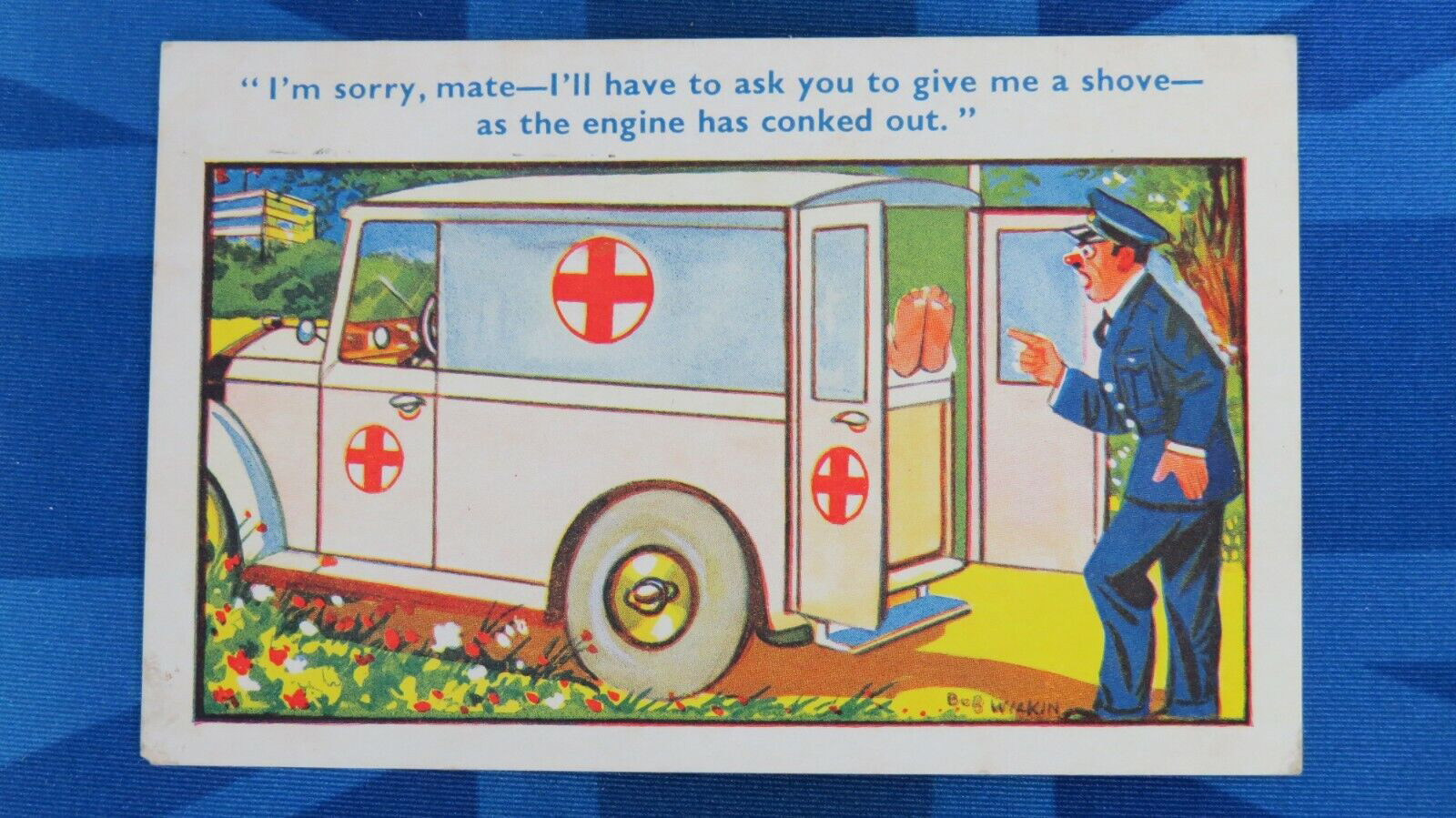
World War II-era civilian ambulance
Read more

This wartime reallocation of clinical personnel forced a nationwide regression in civilian ambulance function. Most ambulances—though not all—provided no medical care en route, serving instead as basic transportation vehicles. This echoed the pre-Civil War era, when patient transport occurred without trained responders or equipment.

The regression persisted into the 1950s and 1960s, delaying the evolution of prehospital emergency care. Reform did not take hold until a new generation of physician leaders—including Peter Safar, J.D. Farrington, Charles Rockwood, and Norman McSwain—pushed for training, system design, and medical oversight outside the hospital.

This period stands as one of the most consequential setbacks in EMS history, revealing how national crises can unintentionally reverse public health gains.

1947 1 event

First Civilian Air Ambulance Service Launches in Los Angeles

In 1947, Schaefer Air Service was established in Los Angeles by J. Walter Schaefer, introducing the nation’s first civilian-operated air ambulance. This innovation brought fixed-wing aircraft into the realm of civilian emergency care, drastically improving response time for critical patients in remote or congested areas. The service pioneered a new era of rapid aeromedical transport, long before such programs became standard nationwide.
Read more

J. Walter Schaefer’s vision for integrating aviation into medical transport set foundational standards for today’s modern air ambulance industry. The company would later expand to ground-based ambulance services and become a staple of California EMS history.

View source

1950s 3 events

“Golden Hour” Concept Coined by Dr. R. Adams Cowley

Baltimore trauma surgeon Dr. R. Adams Cowley introduced the “golden hour” — the critical 60 minutes immediately following injury when rapid transport and care dramatically improve survival chances. He emphasized that this narrow window, which he called a “momentary pause in the act of death,” remains central to trauma response strategy. While some later studies questioned its universality, more refined analyses show the concept still holds true for many moderate-to-severely injured patients. Source

Rise of Funeral Home-Based Ambulances

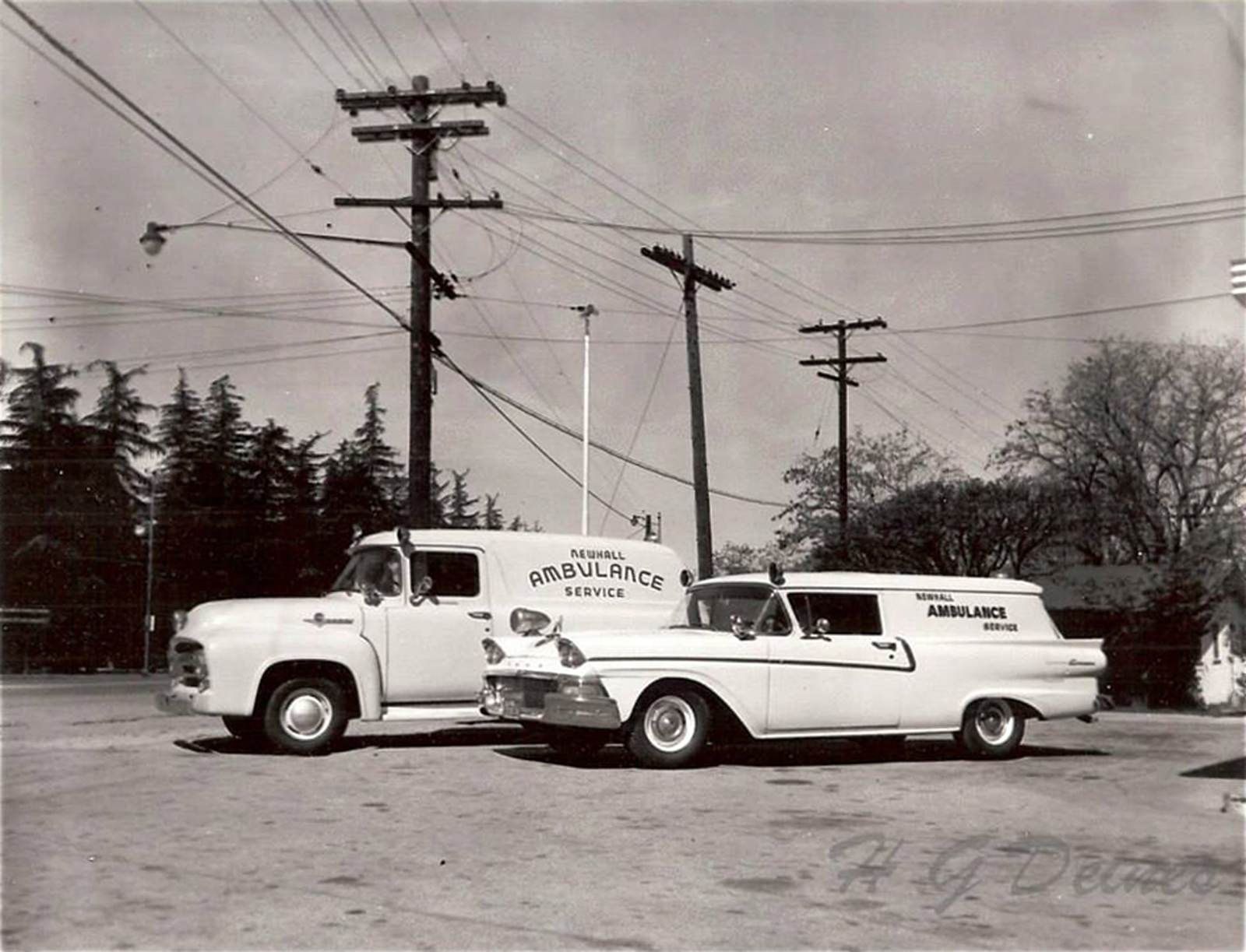
By the 1950s, funeral homes were the primary providers of ambulance transport across much of the United States. Due to the availability of long-wheelbase hearses, which could accommodate stretchers, many communities relied on funeral directors to respond to emergencies—often without formal medical training.
Funeral home ambulance service, 1950s Funeral home-based ambulance crew Vintage funeral home ambulance
Read more

This era marked a gap in prehospital care: vehicles were fast and spacious, but lacked medical equipment, and attendants had minimal training. This model persisted until national EMS reforms emerged in the late 1960s and 1970s.

Photo credit: Gainesville Sun / Carilion Clinic

National Event

Korean War – First Widespread Use of Helicopter Medevac

During the Korean War, the U.S. military pioneered the use of helicopters for medical evacuation, significantly reducing mortality by rapidly transporting wounded soldiers to Mobile Army Surgical Hospitals (M*A*S*H units). Over 20,000 soldiers were evacuated by helicopters. This innovation laid the foundation for rotary-wing EMS, proving the life-saving potential of rapid air transport—a practice later adopted by civilian EMS systems worldwide.
1951 1 event

New Jersey Municipal Ambulance Services Documented

The National Municipal Review published an examination of ambulance services in New Jersey, documenting the patchwork of municipal, volunteer, and funeral home-based systems that characterized mid-century American emergency transport. The article captured the state of EMS during the "Dark Ages" period before federal standardization efforts began.

Read more
1956–57 1 event

Mouth-to-Mouth Resuscitation Validated

In 1956–1957, Dr. Peter Safar and Dr. James Elam scientifically validated mouth-to-mouth resuscitation through a series of clinical experiments and live demonstrations. Their work overturned prior reliance on manual or mechanical ventilation and established direct respiratory rescue as the most effective method for reviving patients in respiratory arrest. This breakthrough formed a foundational component of modern CPR protocols and directly influenced national lifesaving standards.
Read more

Dr. Safar’s subsequent work helped shape the development of cardiopulmonary resuscitation (CPR) and laid the groundwork for the American Heart Association’s early CPR guidelines. His contributions earned him the title “Father of CPR.”

View source

1957 1 event
National Event

First U.S. President Flies in a Helicopter

On July 12, 1957, President Dwight D. Eisenhower became the first U.S. president to travel by helicopter, flying aboard a Bell UH-13J from the White House lawn. This historic moment demonstrated the reliability and versatility of rotor-wing aircraft, reinforcing their strategic value. Within a decade, helicopters would be widely adopted for battlefield evacuation in Vietnam—and later, for civilian EMS use in trauma and disaster response.
1958 2 events

First Civilian Trauma Training for EMS – Chicago Fire Department

In the aftermath of World War II and the Korean Conflict, Drs. J.D. “Deke” Farrington and Sam Banks asked a critical question: why weren’t battlefield lessons in trauma care being applied to civilian emergencies? In 1958, they launched the first civilian trauma training course for the Chicago Fire Department, adapting military field medicine to urban emergency response. This pioneering program became the foundation for the EMT-Ambulance (EMT-A) certification. Dr. J.D. 'Deke' Farrington
Dr. Farrington teaching EMTs in Minocqua, Wisconsin – 1950s
Read more

Dr. Farrington’s curriculum laid the groundwork for structured, medically supervised EMS training nationwide. His work directly influenced the formalization of EMS education in the 1970s and helped define the role of EMS in modern healthcare.

Learn more about Dr. Farrington’s legacy

Cardiac Massage (“CPR”)

Drs. Kouwenhoven and Knickerbocker, along with cardiac surgeon Dr. James Jude, discovered that chest compressions could maintain 40% of normal circulation during cardiac arrest. With the addition of mouth-to-mouth resuscitation inspired by Dr. Peter Safar’s work, this technique evolved into what is now known as cardiopulmonary resuscitation (CPR). The first successful human case occurred in 1959 when CPR revived a patient without the need for open-chest intervention.

Credit: National EMS Museum
Read More
Historic CPR defibrillation image
Read more
1959 1 event

AMA Report on Emergency Medical Care

In response to a direct request from the White House, the American Medical Association published a landmark 1959 report titled “Report of the AMA’s Ad Hoc Committee on Emergency Medical Services.” The report warned that many ambulance services were being provided by inadequately trained personnel with poor equipment, and called for sweeping reforms in training, system design, and physician oversight. It laid the intellectual and institutional foundation for what would become the modern EMS system in the United States.
Read more

The report emphasized the need for nationally coordinated standards, proper physician supervision, and a new healthcare role for ambulance services beyond simple transport—helping to elevate EMS as a legitimate component of medical care.

View source

1960 2 events

Lincoln Ragsdale Sr., Tuskegee Airman, Operates Air Ambulance

After his service as a Tuskegee Airman—a pioneering Black pilot trained at the Tuskegee Army Air Corps Field—Lincoln J. Ragsdale Sr. settled in Arizona in 1960 and launched a commercial air ambulance and ambulance service. Beyond medicine, he was a prolific entrepreneur and civil‑rights leader. His business enterprises—including a mortuary, real estate, multiple insurance firms, construction, restaurant/nightclub, and flower shop—were used both to serve underserved Black communities and to strategically integrate employees and clients across racial lines.
Lincoln Ragsdale Sr.
Read more

Ragsdale’s ambulance service was part of a broader empire: mortuary services, insurance firms, a real estate agency, a flower shop, a nightclub, and more. He hired white workers and challenged segregation through economic influence, community advocacy, and political leadership.

View source

Resusci Anne: First CPR Training Manikin

Dr. Peter Safar partnered with Norwegian toy maker Åsmund S. Lærdal to create the world’s first CPR training manikin—Resusci Anne. This innovative tool integrated Safar’s pioneering technique of mouth-to-mouth ventilation with newly recognized chest compression methods, making it possible to realistically simulate lifesaving techniques for trainees. Resusci Anne revolutionized CPR education and became a foundational component of emergency medical training worldwide.
Resusci Anne CPR Manikin
1963 3 events

Emergency Identification Symbol Adopted

In 1963, the World Medical Association adopted the universal Emergency Identification Symbol—three red bars in a circular pattern—as a visual marker to signal medical urgency and identify individuals with medical conditions. That same year, the U.S. Navy formalized the first paramedic training curriculum, building on battlefield care models and establishing training precedents that would later inform civilian paramedicine.
Emergency Identification Symbol
Read more

The Emergency Identification Symbol became one of the earliest standardized visual cues in emergency medicine, preceding the now-familiar Star of Life. Its adoption marked an early step in creating a unified language for EMS alerts and patient identification.

View source

National Safety Council Model Ambulance Ordinance/Statute Approved

On April 3, 1963, the National Safety Council’s Traffic Conference Executive Committee approved a model ordinance (also adaptable as a state statute) regulating ambulance service. The effort began in 1956 as a Joint Action Program sponsored by the American College of Surgeons, the American Association for the Surgery of Trauma, and the National Safety Council; in late 1959, the group’s policy committee asked the Traffic Conference to develop the model. The draft emphasized use as a state law where feasible and was intended to promote uniformity throughout the United States.
Read more

Peter Safar's Visit to Russia & WADEM Origins

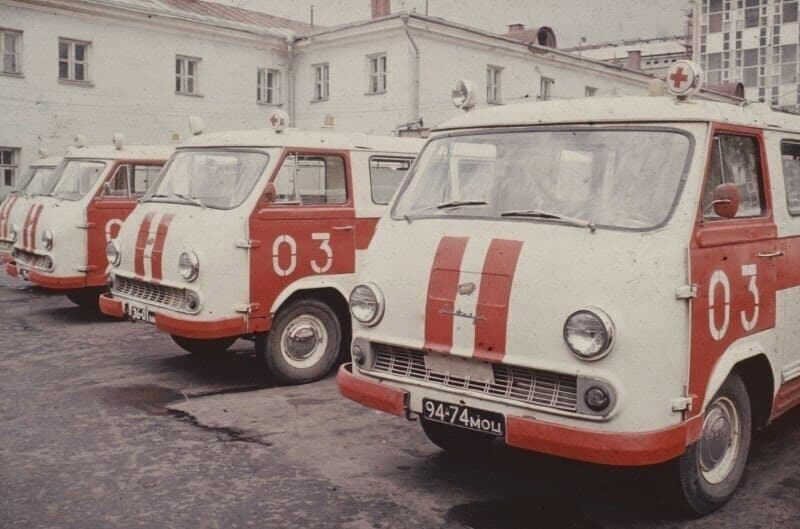
In 1963, Dr. Peter Safar—renowned for advancing CPR—visited the Soviet Union and collaborated with Dr. Vladimir Negovsky, a leading figure in reanimatology. Safar noted the Soviets’ use of purpose-built ambulances, far more advanced than the repurposed hearses common in the U.S. at the time. His global perspective on emergency care and disaster preparedness helped shape the vision for what would become the World Association for Disaster and Emergency Medicine (WADEM).
Read more in *Resuscitation*
Peter Safar and Russian ambulance
Read more
1964 1 event

Personal Emergency Identification Systems Formalized

Dr. Burr published research on personal emergency identification systems, contributing to the growing standardization of emergency medical symbols and identification protocols. This work complemented the broader movement toward uniform emergency identification that would culminate in the adoption of the Star of Life symbol.

Read more
1965–1975 3 events

Public Health Journal Calls for Ambulance Reform

In 1965, the American Journal of Public Health published a groundbreaking article advocating for a national approach to ambulance services and emergency care. This early scholarly work recognized the fragmented state of EMS and emphasized the need for better training, equipment, and integration into public health infrastructure.
Read more

The article helped shift EMS from being viewed as transportation-only to a legitimate component of healthcare. It was an early voice in the growing national dialogue that would culminate in sweeping reforms by the end of the decade.

Read full article (PDF)

Medicare Act of 1965 Signed into Law

President Lyndon B. Johnson signed the Medicare Act into law on July 30, 1965, establishing a federal health insurance program for Americans over the age of 65. While primarily focused on hospital and medical insurance, the legislation also helped formalize reimbursement structures that would later include ambulance services—laying a financial foundation for EMS development.
Read more

The Medicare Act became a major funding mechanism for EMS, particularly in the 1970s and beyond. As ambulance services transitioned into healthcare delivery systems, Medicare billing policies became essential for sustainability and professionalization.

Read the original Medicare Act (PDF)

National Event

Vietnam War – Medevac and Trauma System Innovations

US ground troops involved in the Vietnam War accelerated the development of helicopter medevac systems, advanced trauma life support techniques, and rapid battlefield triage protocols. The "Golden Hour" concept emerged, reinforcing the critical importance of timely care. Many returning military medics entered civilian EMS, bringing valuable skills and shaping the early paramedic profession. These wartime lessons directly influenced the creation of the first urban EMS systems in the 1960s and 70s.