← All Eras
Era 4 of 6 · 1981–1999

State Regulation & National Standardization

Building the framework

States assumed leadership of EMS regulation while national organizations drove standardized curricula, certifications, and system-level accountability.

50 documented events
1981 3 events

EMS Funding Shifts to Block Grants (OBRA); Regional Entities Dissolve

Federal EMS funding transitioned into broader block grants under the Omnibus Budget Reconciliation Act, leading to the dissolution of many federally supported regional EMS entities.
Read more

NHTSA Evaluates Impact of Mobile Coronary Care

In 1981, the National Highway Traffic Safety Administration (NHTSA) released a detailed report examining the clinical effectiveness and system-wide impact of Mobile Coronary Care Units (MCCUs) as part of evolving EMS systems.
Read more

The report assessed how early interventions for cardiac emergencies, such as prehospital defibrillation and advanced cardiac life support (ACLS), contributed to patient survival rates. It provided evidence supporting investment in advanced EMS capabilities and reinforced the value of specially trained paramedic teams in reducing cardiac mortality.

This study marked one of the earliest federal attempts to measure EMS clinical outcomes and justify continued system development through data-driven research.

View Full Report (PDF)

Virginia’s First Air Medical Program and Trauma Center Designation

The state dedicated its first air medical evacuation service in Salem and designated the Medical College of Virginia as its first Level I Trauma Center. Block grant funding extended statewide to support all EMS councils.
1982 3 events

Division of EMS at HHS Nears Extinction — Federal EMS Leadership Collapses

By mid-1982, the Division of Emergency Medical Services at the Department of Health and Human Services — the agency that had directed the federal effort to build EMS systems nationwide for eight years — was reduced to a skeleton staff of its director David Boyd, his deputy John Riordan, and a secretary. During its eight years administering categorical funds, the division had spent $309 million and designated 303 EMS regions across the country. Now Congress had shifted EMS into block grants with no reporting requirements, and states redirected funds to competing priorities. R. Adams Cowley estimated the nation was only about a third of the way toward a functioning national EMS system.
Read more

A contemporary Hospitals magazine investigation documented the collapse in real time. Susan McHenry, president of the National Association of State EMS Directors, warned that after block grants expired, "EMS programs will be in serious trouble." At the CDC, a spokesman admitted the agency had no handle on how much states were spending on EMS. Boyd noted that states had spent seven or eight times the federal contribution — but without federal leadership, coordination was fragmenting.

Source: Richards, Glenn. "Outlook for EMS Guarded But Favorable." Hospitals, August 1, 1982, pp. 62–66.
Read the original article (PDF)

See also:
Gibson, Geoffrey. "Emergency Medical Services." Proceedings of the Academy of Political Science, 1977 — predicted the structural failure of federal EMS regionalization five years before it occurred (PDF)
Page, James O. "Medical-Legal Considerations in Prehospital Care." TEM/The Prehospital Care System, 1980 — documented the emerging legal framework and structural orphan status of paramedics (PDF)
Page, James O. "The EMS Funding Question." 1982 (PDF)

Virginia Adopts First State EMS Plan

Virginia launched its First Responder program and adopted its inaugural statewide EMS plan to guide system priorities and coordination.

Introduction of Two Versions of EMT-Ambulance Exam

The National Registry introduced parallel forms of the EMT exam to improve security and prevent test compromise.
1983 5 events

“One for Life” Law Enacted in Virginia

Virginia enacted a $1 vehicle registration fee to support EMS, transitioned council funding to state control, and began reimbursing EMT instructors—laying the foundation for long-term system sustainability.

Boyd & Cowley Define 303 Regional EMS Systems

Dr. David Boyd and Dr. R. Adams Cowley published a foundational article outlining the vision for 303 regional EMS and trauma systems across the United States—emphasizing coordinated care, regional planning, and integration with existing healthcare infrastructure.
Read more

Appearing in a peer-reviewed journal, this article detailed the Department of Health and Human Services' strategy for organizing EMS around functional regions to ensure trauma and emergency resources were available across diverse geographic and population zones. The model became a basis for state and federal EMS planning throughout the 1980s.

View source (EMS History PDF)

Standalone EMT-Intermediate Exams Launched

The National Registry rolled out separate written and practical exams for EMT-Intermediate, formalizing it as a distinct certification tier.

System Status Management Debuts in Denver

Jack Stout introduced System Status Management (SSM) in the Denver EMS system, revolutionizing how ambulance placement and deployment were managed. This strategy, grounded in predictive data and demand forecasting, allowed EMS systems to optimize unit availability and reduce response times.

Stout's work soon expanded to include the development of Public Utility Models (PUMs), EMS performance contracts, and one of the first EMS-specific Computer Aided Dispatch (CAD) systems. These innovations gave municipalities tools to measure provider performance and advance continuous quality improvement. Most PUMs today still reflect the foundational standards first proposed by Stout.

Source: JEMS (1983) – The Strategy of Ambulance Placement

PHTLS: Prehospital Trauma Life Support

In 1983, the National Association of Emergency Medical Technicians (NAEMT), in cooperation with the American College of Surgeons Committee on Trauma, developed Prehospital Trauma Life Support (PHTLS). The course was created to provide trauma education specifically for EMS clinicians, building upon the concepts of the Advanced Trauma Life Support (ATLS) program for physicians.

Today, PHTLS is a globally recognized program that has trained over 500,000 individuals in more than 50 countries. It has become a cornerstone of trauma education in EMS, emphasizing critical thinking and trauma assessment.

PHTLS Logo
Dr. Norman McSwain Image: Dr. Norman McSwain – PHTLS Founder and Trauma Educator

Read the NAEMT History of PHTLS
Learn more at NAEMT.org
Tribute to Dr. Norman McSwain (JEMS)

1984 5 events

National Association of EMS Physicians (NAEMSP) Formed

The National Association of EMS Physicians was founded in 1984 at a meeting of national EMS leaders in Hilton Head, South Carolina. Dr. Ronald D. Stewart — the first medical director of the Los Angeles County paramedic program and a technical consultant on the television series Emergency! — was elected its inaugural president. NAEMSP was created to advocate for physician-led medical direction and to advance EMS as a medical subspecialty grounded in evidence-based practice.
Read more

NAEMSP went on to co-author the landmark EMS Agenda for the Future (1996) under contract with NHTSA and NASEMSO, publish the peer-reviewed journal Prehospital Emergency Care, and champion the Protecting Patient Access to Emergency Medications Act (P.L. 115-83), which was signed into law in 2017. The organization represents over 1,500 physicians, paramedics, nurses, and researchers and remains the leading national voice for EMS medical oversight and quality.

NAEMSP: Who We Are

NAEMSP Remembers Dr. Ronald D. Stewart (1942–2024)

EMS for Children (EMSC) Program Launched

The federal EMSC initiative began to improve pediatric emergency care, filling a critical gap in EMS protocols and training.

SAM Medical Founded to Produce the SAM Splint

Inspired by his experience as a U.S. Army Medic during the Vietnam War, Dr. Sam Scheinberg invented the SAM® Splint—using a simple gum wrapper to prototype the idea. Recognizing its field potential, he founded SAM Medical in 1984 to begin commercial production.
SAM Splint
Read more

In 1985, full-scale manufacturing of the splint began, introducing EMS and military providers to a revolutionary lightweight, moldable, radiolucent splint that became a global standard in emergency care.

View source (Oregon Business)

Fragmented & Fractured: NHTSA Seeks Reciprocity

In 1984, the National Highway Traffic Safety Administration (NHTSA) entered into a collaborative agreement with the National Association of State EMS Directors (later NAEMSO) to develop national reciprocity guidelines for Emergency Medical Technicians (EMTs). During a congressional appropriations hearing, the NHTSA Director described the initiative:
“…as a means of encouraging States to adopt a uniform Emergency Medical Technician training program… while [States] had some form of Paramedic certification…it was not known whether the State certification program was based on NHTSA guidelines, or on individual State requirements.”
This effort exposed the deep fragmentation in EMS certification standards across the country. Although EMTs and paramedics were operating in nearly every state, there was no clear consensus on training, scope, or credentialing alignment. By the 1990s, this lack of uniformity culminated in more than 40 different variations of EMT certification across the U.S.
Read more
1985 3 events

The Systems Approach Was Fragmented

In 1985, as federal funding for EMS faced elimination, the National Association of State EMS Directors issued a formal resolution and delivered testimony before Congress. The organization emphasized the critical need for continued national leadership, warning that the systems approach to EMS would collapse without sustained support.
Read more

In their testimony, the Association warned: “Without Federal involvement, the systems approach will not be achieved. The result will be fragmented, poorly coordinated efforts.”

The resolution highlighted that EMS had outgrown its experimental status and required a stable, long-term policy and funding structure to protect public health and safety nationwide.

Read Full Testimony and Resolution (PDF)

Injury in America Report & National EMS Curricula Released

The National Research Council released Injury in America: A Continuing Public Health Problem, highlighting critical gaps in addressing trauma and accidental death, echoing concerns first raised in the 1966 "White Paper." The report called for stronger data collection, prevention strategies, and trauma system development.

In the same year, the U.S. Department of Transportation published new national standard curricula for EMT-Intermediate and EMT-Paramedic levels. These curricula formalized and standardized EMS education nationwide, marking a major step in professionalization and training consistency.

Sources: National Academies Press | DOT National EMS Curriculum Archives

Broselow Tape Revolutionizes Pediatric Emergency Care

Emergency physician Dr. James Broselow, working alongside Dr. Robert Luten, introduced the first prototype of the Broselow Tape in 1985—a color-coded, length-based tape designed to rapidly estimate a child’s weight and provide pre-calculated, weight-appropriate drug dosages and equipment sizes in emergency settings.
Dr. James Broselow
Dr. James Broselow, MD with the original Broselow Tape
Image credit: JEMS
Read more

The Broselow Tape dramatically reduced pediatric medication errors, addressing a major risk in prehospital and emergency care where weight-based calculations are prone to tenfold errors. Widely adopted worldwide, it remains a staple in pediatric resuscitation and emergency preparedness.

Read the EP Monthly Article
Wikipedia Entry

1986 1 event

DOT Publishes First Air Ambulance Guidelines

In 1986, the U.S. Department of Transportation, in collaboration with the American Medical Association’s Committee on Emergency Medical Services, published the nation’s first Air Ambulance Guidelines. These guidelines established foundational safety, training, and operational standards for helicopter and fixed-wing medical transport programs. This milestone helped professionalize aeromedical services and laid the groundwork for modern air EMS regulation.
Read more
1988 2 events

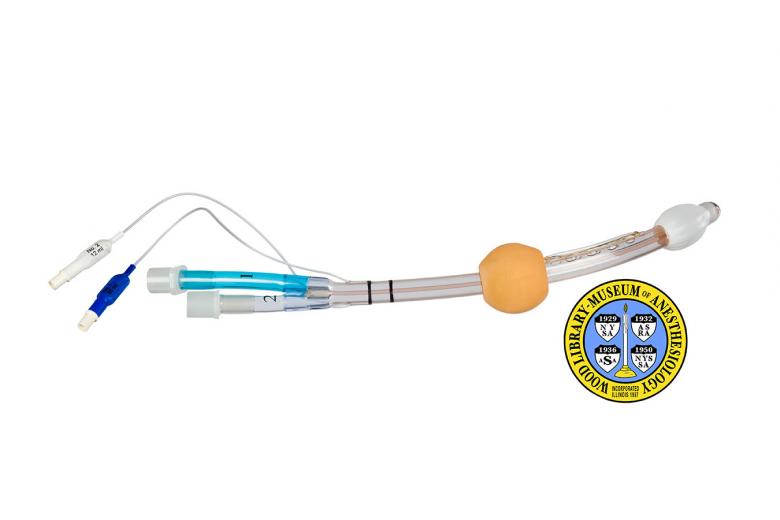
Commercial Production of the Combitube Begins

In 1988, commercial production of the esophageal-tracheal Combitube began, marking a major innovation in airway management for emergency medical services.
Combitube Prototype
Read more

The Combitube was designed to provide a reliable airway whether inserted into the trachea or the esophagus. It became widely adopted in prehospital care, particularly for difficult airway situations or when intubation was not feasible.

This dual-lumen device, originally developed by Dr. Harald Frass and colleagues, offered EMS providers a simpler, quicker alternative to endotracheal intubation.

Wood Library-Museum Combitube Exhibit

NHTSA Launches EMS State Technical Assessment Program

In 1988, the National Highway Traffic Safety Administration (NHTSA) initiated a Statewide EMS Technical Assessment Program to provide objective evaluations of state EMS systems. These assessments were based on ten essential components that remain foundational to EMS system development:
  • Communications
  • Evaluation
  • Facilities
  • Human Resources and Training
  • Medical Direction
  • Public Information and Education
  • Regulation and Policy
  • Resource Management
  • Transportation
  • Trauma Systems
The program helped standardize EMS evaluation across the country, enabling states to benchmark progress and identify areas for improvement.

Source: NHTSA Office of EMS Archives
1989 1 event

Allied Health Clarified: National IOM Report

The Institute of Medicine published Allied Health Services: Avoiding Crises, a foundational report that clarified the evolving definition of allied health professions. Drawing on input from the American Medical Association’s Committee on Allied Health Education and Accreditation (CAHEA), the report emphasized the importance of allied health professionals in complementing physician-led care and the need for standardized recognition across nearly 3,000 educational programs.
"... a large cluster of health care related professions and personnel whose functions include assisting, facilitating, or complementing the work of physicians and other specialists in the health care system, and who choose to be identified as allied health personnel." – CAHEA, 1987
1990 6 events

Trauma Care Systems Act Passed

The 1990 Trauma Care Systems Act marked a significant step in federal involvement with trauma and EMS systems. It briefly established the Division of Trauma and Emergency Medical Systems within the Health Resources and Services Administration (HRSA), intended to support and coordinate national trauma system development.
Read more

The Act aimed to improve survival and outcomes for trauma victims by encouraging comprehensive trauma system planning and coordination at the state level. It was also an attempt to re-establish national EMS leadership following the dismantling of prior federal EMS programs.

Read the full Trauma Care Systems Act (PDF)

Formation of the EMS Alliance

In response to emerging federal healthcare strategies, EMS organizations formed the EMS Alliance to coordinate national collaboration, influence policy, and establish a unified strategic direction.

Creation of the EMS Agenda for the Future

NHTSA contracted with NASEMSO and NAEMSP to draft a forward-looking vision for EMS. This document laid the strategic foundation for EMS system integration, data infrastructure, and community-based innovation.

Gulf War and EMS Deployment

The Gulf War (Operation Desert Shield and Operation Desert Storm) marked a major U.S. military engagement that highlighted the critical role of emergency medical services in combat support operations. EMS clinicians—both civilian and military medics—supported rapid evacuation, forward resuscitative care, and battlefield triage innovations. Lessons learned from this conflict influenced the evolution of EMS trauma systems, mass casualty response, and interagency coordination across U.S. emergency preparedness efforts in the 1990s.

Virginia Passes “Two for Life” Legislation

Virginia doubled its annual motor vehicle registration fee for EMS to $2.00 and launched the only state-sponsored satellite EMS training program in the U.S., broadcasting monthly across the nation.

Virginia Launches Computerized Continuing Education Program

Virginia pioneered new continuing education pathways—including hospital rotations, video-based learning, and self-study—to modernize and expand access to EMS recertification.
1991 4 events

Participation in EMT-Basic Curriculum Revision

The National Registry worked with U.S. DOT to revise the EMT-Basic curriculum, ensuring certification exams reflected updated national standards.

Utstein Style Introduced for Cardiac Arrest Reporting

In 1991, international resuscitation experts convened at the Utstein Abbey in Norway to develop a standardized method for reporting cardiac arrest data. The resulting "Utstein Style" established a uniform template for out-of-hospital cardiac arrest (OHCA) research, enabling consistent data collection and comparison across EMS systems globally. It marked a foundational moment in evidence-based prehospital care and remains the global standard today.

Source: Resuscitation, 1991;22(1):1-26

"Chain of Survival" Concept Published by the AHA

The American Heart Association published the "Chain of Survival" concept in Circulation, defining four critical links for cardiac arrest survival: early access, early CPR, early defibrillation, and early advanced cardiac life support. Authored by Cummins, Ornato, Thies, and Pepe, the framework became the organizing principle for EMS cardiac arrest response systems worldwide and reshaped how communities designed and evaluated their emergency cardiac care.
Read more

The Chain of Survival provided a simple, evidence-based model that EMS systems, hospitals, and public health agencies could use to identify and strengthen weak links in their cardiac arrest response. It drove the expansion of public access defibrillation programs, bystander CPR training mandates, and dispatcher-assisted CPR protocols over the following decades.

Virginia Automates Testing and Education Records

Digitizing records improved administrative efficiency and paved the way for more reliable certification tracking.
1992 4 events

Texas EMS Magazine Established

Texas EMS Magazine began publication in 1992 as a bimonthly magazine issued by the Texas Department of State Health Services in Austin. It succeeded the Texas EMS Messenger, which was published monthly from 1989 to 1992 by the Texas Bureau of Emergency Management. Both publications played an important role in documenting EMS development and practice across the state.

Texas EMS Magazine cover Image: Texas EMS Magazine Cover – Source: Portal to Texas History

National Registry Adopts ADA-Inclusive Policy

A new policy supported EMS candidates with learning disabilities, aligning certification practices with the Americans with Disabilities Act and promoting inclusivity.

National EMT Training Blueprint Funded

Federal support enabled coordinated development of standardized EMS education across the U.S., furthering professionalization.

Higher Education Act Reauthorization Addresses Accreditation Conflict

The 1992 reauthorization of the Higher Education Act (Senate Bill 1150) included provisions prohibiting professional organizations—like the AMA—from holding accreditation authority over allied health educational programs such as EMS. This legislative change redirected the accreditation oversight to independent bodies, ensuring impartial evaluation of EMS training programs and eliminating conflicts of interest inherent in accrediting authority being held by a profession‑specific organization. October of 1992, the AMA announced its intent to support the establishment of a new and independent agency to assume accreditation responsibilities. In 1994, CAHEA was dissolved, and the Commission on Accreditation of Allied Health Education Programs (CAAHEP) became the sponsoring body for accreditation.
Read more
Senate Bill 1150, Higher Education Amendments of 1992 [oai_citation:0‡govinfo.gov](https://www.govinfo.gov/content/pkg/HOB-1992/html/HOB-1992-s1150.htm?utm_source=chatgpt.com)
1993 3 events

Education and Practice Blueprint Endorsed

The Registry endorsed the EMS Education and Practice Blueprint and supported CAAHEP, helping advance formal accreditation in EMS education.

Tactical Combat Casualty Care: Beginnings

Tactical Combat Casualty Care (TCCC) was born from a Naval Special Warfare research effort after discovering that extremity hemorrhage—a leading cause of preventable battlefield deaths—was not being routinely treated with tourniquets. This realization led to a comprehensive, three-year study from 1993–1996 involving special operations medics and the Uniformed Services University. The result was TCCC: the first battlefield trauma care guidelines that aligned sound medical practices with tactical realities. TCCC dramatically reshaped combat medicine and has since influenced civilian tactical EMS as well.
TCCC Logo

World Youth Day: Denver EMS Responds to Over 500,000

In August 1993, Denver hosted World Youth Day, welcoming over 500,000 attendees to Cherry Creek State Park for a week of spiritual events culminating in a Papal Mass with Pope John Paul II. Months of interagency EMS planning resulted in one of the largest pre-planned EMS deployments in U.S. history not involving war or natural disaster. Paramedics and volunteers treated over 20,000 patients in a 36-hour period, peaking at nearly 500 patients per hour. The incident became a landmark in large-scale mass gathering medical response and remains a model of coordinated EMS readiness.
World Youth Day EMS
1995 3 events

National Practice Analysis Conducted

The Registry conducted a national study to align EMS testing with real-world practice, improving relevance and competency assurance.

Virginia Adopts National EMT-B Curriculum

Virginia became one of the first states to adopt the new EMT-Basic curriculum, training more than 500 instructors through coordinated rollout programs.

UMBC Launches CCEMTP℠ Program

On January 28, 1995, the University of Maryland, Baltimore County (UMBC) launched the first Critical Care Emergency Medical Transport Program (CCEMTP℠) with 25 students in Baltimore, Maryland. The program was developed in response to the growing demand for specially trained paramedics capable of managing complex interfacility transfers involving critically ill or injured patients.

CCEMTP℠ quickly became a nationally recognized model for critical care transport education, helping to formalize and elevate the role of critical care paramedics across the U.S. and beyond.

CCEMTP Program Logo Image: UMBC CCEMTP℠ Logo – Source: UMBC
1996 3 events

EMS Agenda for the Future Published

In 1996, the National Highway Traffic Safety Administration (NHTSA), in collaboration with federal partners and EMS stakeholders, released the EMS Agenda for the Future. This visionary document outlined a 30-year plan for modernizing and integrating EMS into the broader healthcare and public safety systems.
Read more

The Agenda emphasized EMS as a critical, community-based healthcare resource—not just a transport service—highlighting key domains such as integration with public health, use of data, workforce development, and system sustainability.

View source: EMS Agenda for the Future, NHTSA 1996 (PDF)

NYC Emergency Medical Service Transfers to FDNY

On March 17, 1996, New York City's Emergency Medical Service was officially transferred from the Health and Hospitals Corporation to the Fire Department of New York (FDNY). This consolidation created one of the largest fire-based medical response systems in the United States, centralizing emergency response and aiming to improve coordination and efficiency.

This structural change was enacted by Executive Order No. 27 and marked a pivotal moment in the modernization of emergency services in the city.

More information: FDNY Bureau of EMS (Wikipedia)

Community Paramedicine Concept Emerges in U.S. Rural and Frontier EMS Systems

The first U.S. community paramedicine programs launched in Orange County, North Carolina (1996) and Idaho (1997), deploying paramedics in expanded roles to assess, treat, and refer low-acuity patients without hospital transport. Idaho became the first state to create Medicaid reimbursement for "respond and evaluate" and "treat and release" services. The concept aligned with the 1996 EMS Agenda for the Future, which envisioned paramedics providing scene-based care with referrals to primary care — a fundamental departure from the transport-only model.
Read more

The community paramedicine model grew from converging pressures: rising ED overcrowding, managed care's emphasis on delivering the right care at the right time, and the reality that rural EMS agencies responded to many calls but transported fewer patients — without reimbursement for non-transport care. In 2005, the International Roundtable on Community Paramedicine formalized global collaboration, and by 2012 NAEMSP and the National Rural Health Association adopted joint principles for CP programs. The model later became central to the 2025 Rural Health Transformation Program's treat-in-place initiatives.

JEMS: History of Community Paramedicine

CDC: The Value of Community Paramedicine

1997 2 events

MAST Military Anti-Shock Trousers Phased Out

In 1997, the National Association of EMS Physicians (NAEMSP) issued a position paper evaluating the efficacy of Military Anti-Shock Trousers (MAST), once common on ambulances. The conclusion: MAST provided limited benefit and were largely obsolete in modern EMS practice.
MAST trousers image
Read more

MAST was found to be potentially helpful in rare cases such as ruptured abdominal aortic aneurysm (AAA) and possibly beneficial in certain types of hypotension or uncontrolled lower extremity bleeding. However, evidence of harm and ineffectiveness in most trauma cases led to its removal from standard EMS protocols.

MAST is now considered a relic of outdated trauma care—“ancient medicine” rarely, if ever, seen on ambulances today.

Read Full Study on PMC

State Assessment

Colorado NHTSA EMS Assessment

The National Highway Traffic Safety Administration conducted its first technical assessment of Colorado's emergency medical services system, evaluating system organization, training, communications, and medical direction against national standards.

Read more
1998 1 event

LIFEPAK 12 Defibrillator Introduced

The LIFEPAK 12 defibrillator/monitor was introduced in 1998, marking a major advancement in prehospital cardiac care. The unit featured ADAPTIV biphasic defibrillation technology and expanded monitoring capabilities including non-invasive blood pressure (NIBP), capnography (EtCO₂), and later ST segment monitoring and Bluetooth-enabled 12-lead ECG transmission. These innovations transformed how paramedics and emergency physicians managed acute cardiac events in the field.

View Source (Wikipedia)

1999 1 event
State Assessment

California NHTSA EMS Assessment

NHTSA assessed California's statewide EMS system, the largest in the nation, evaluating its multi-tiered structure of local EMS agencies, trauma systems, and coordination across 58 counties.

Read more